
Sugar is highly palatable and energy-dense, which can contribute to excess calorie intake. A common strategy to reduce sugar consumption is to replace it with low- or no-calorie sweeteners, which provide sweetness without the associated energy.
Although sweeteners are generally considered safe, public concerns remain regarding their effectiveness and potential health risks. Some studies have suggested that sweeteners may be ineffective for weight management or could negatively affect gut health. The evidence is conflicting, likely due to differences in study design.
This randomized controlled trial examined the long-term effects of sweeteners on weight loss maintenance, cardiovascular health, and the gut microbiome.
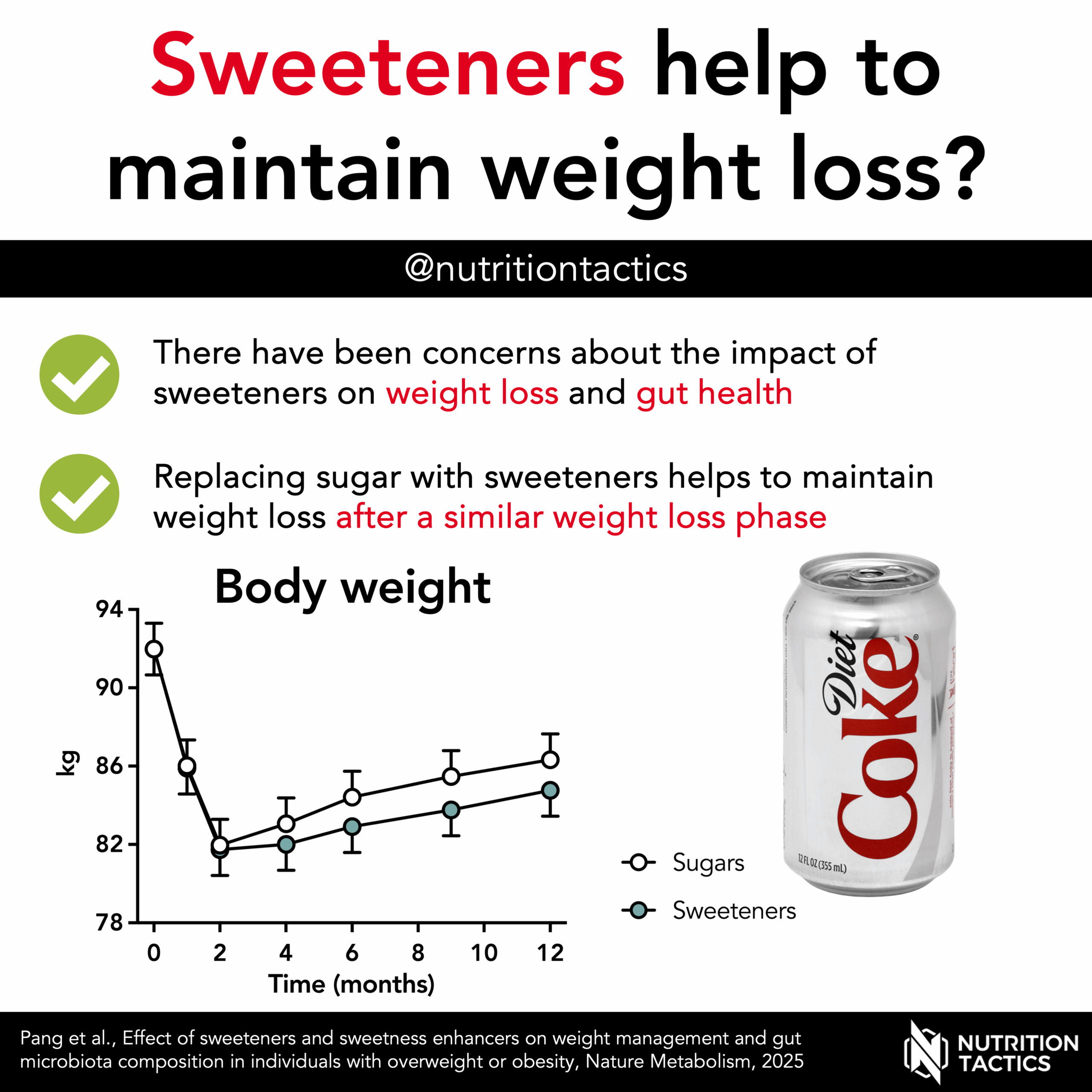
Participants (341 adults and 38 children) with overweight or obesity first followed a two-month weight-loss diet, achieving at least a 5% reduction in body weight. They were then assigned to a 10-month healthy diet phase:
- The sugar group was allowed <10% of total energy from sugar.
- The sweetener group replaced sugar with sweeteners as much as possible
Key findings after the 12 months:
- The sweeteners group maintained greater weight loss (1.6±0.7 kg).
- The sweeteners group showed beneficial changes in the gut microbiome.
- No significant differences between the groups were observed for cardiometabolic health markers.
Interpretation:
This large-scale trial indicates that replacing sugar with sweeteners helps maintain weight loss. Moreover, the use of sweeteners did not adversely affect cardiometabolic health and improved the gut microbiome.
Strengths of this study include its long study duration (12 months), large multi-national sample size (379 participants), inclusion of multiple sweeteners and commercial products, and the replacement of sugar with sweeteners within a generally healthy diet. A limitation is that, because commercial products were used, blinding of subjects was not possible.
Leave a Reply