
Exercise provides many health benefits and can improve fitness and appearance. Yet, many people do not exercise regularly.
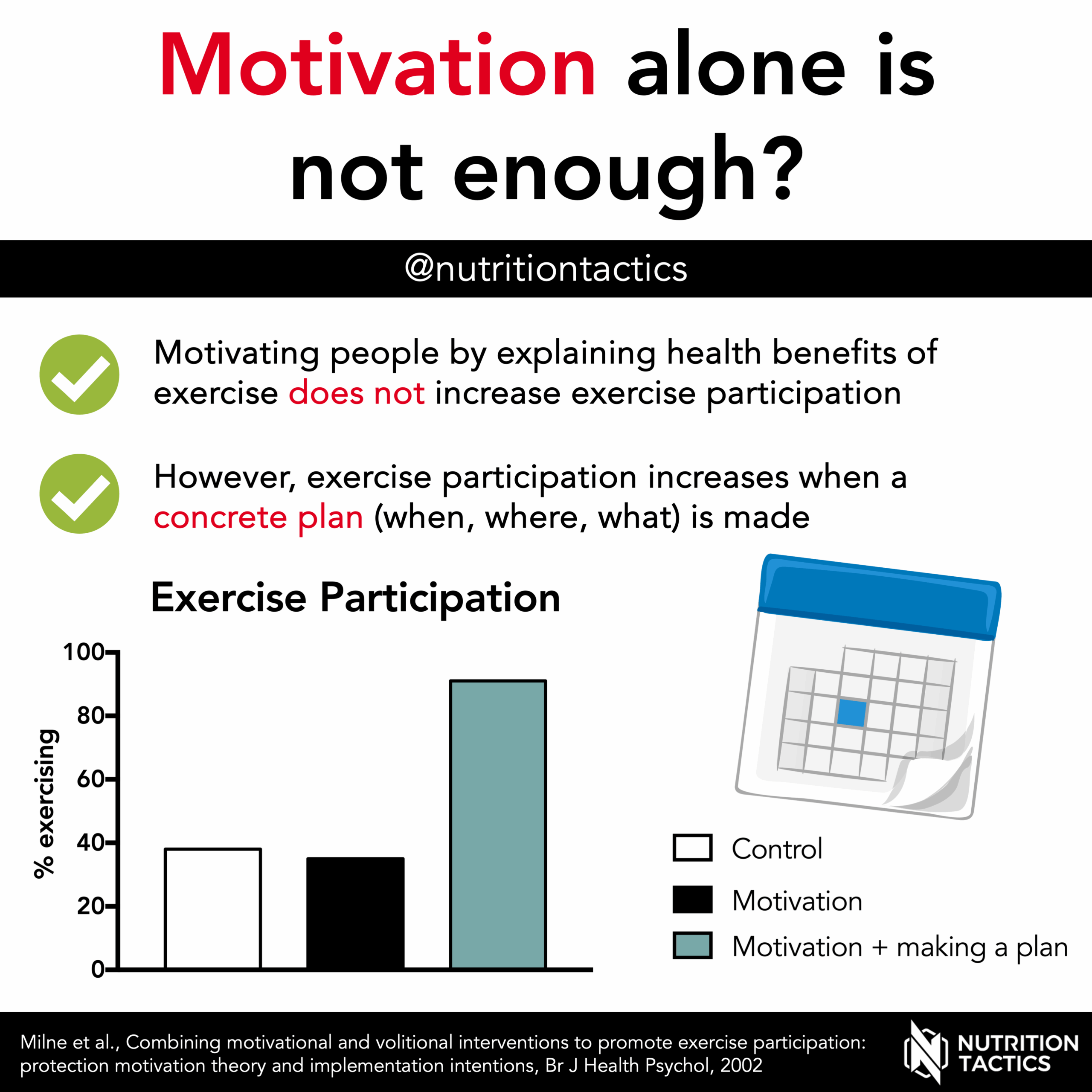
This study investigated the impact of educational and planning strategies on exercise participation. Participants (n=248 university students) were randomly assigned to three groups. Exercise sessions were measured over the week following the intervention.
- Control: reading a neutral text (first three paragraphs of a novel)
- Motivation: reading a leaflet with information about the health benefits of exercise
- Planning: received the same leaflet plus completed a planning task specifying what, when, and where to exercise
Key findings:
- Education alone increased the motivation to exercise but did not increase actual exercise participation; many participants reported being ‘too busy to exercise’.
- Education combined with a planning task increased both motivation and actual exercise participation (91% of participants exercised at least once in the week following the intervention).
Interpretation
This study shows that information alone can increase motivation, but that this does not always lead to behavior change. Even motivated individuals may fail to act. Creating a specific plan, such as deciding what, when, and where to exercise, can help turn intentions into action. This strategy, known as implementation intentions, has been shown to work for other behaviors as well.
A strength of the study was the large sample size. Limitations include the very short study duration (1 week) and the outcome was based on self-reported sessions (not objectively verified).
Leave a Reply