
Ultra-processed foods drive overeating, but adding protein is often marketed as a fix.
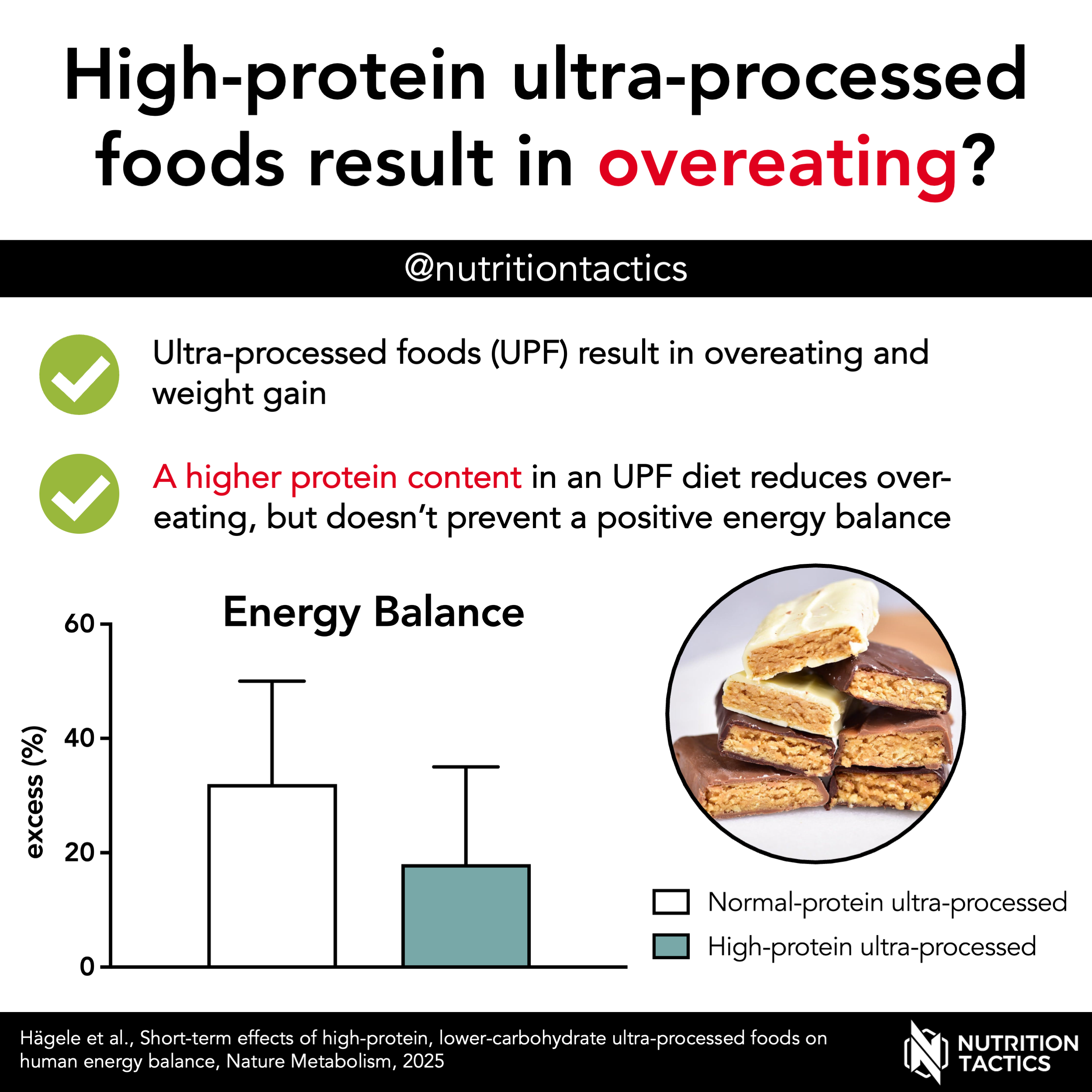
This study compared two ultra-processed diets: high protein vs normal protein (3.3 vs 1.5 g/kg/d).
Participants lived in a metabolic chamber for 2.5 days with plentiful access to each diet (they could eat as much as they wanted). Both energy intake and expenditure were measured to assess energy balance.
Key finding:
The normal-protein diet led to a positive energy balance of 32%, while the high-protein diet cut this down to 18%.
So more protein helped, but didn’t fix the problem. Ultra-processed diets, high in protein or not, still promote overeating.
That said, these products can still be useful for specific groups, such as clinical patients or athletes who struggle to meet both their caloric and protein intake requirements.
Leave a Reply