
Exercise stimulates the uptake of blood sugar (glucose) into the exercised muscle. But does it affect glucose uptake in other muscles that have remained rested?
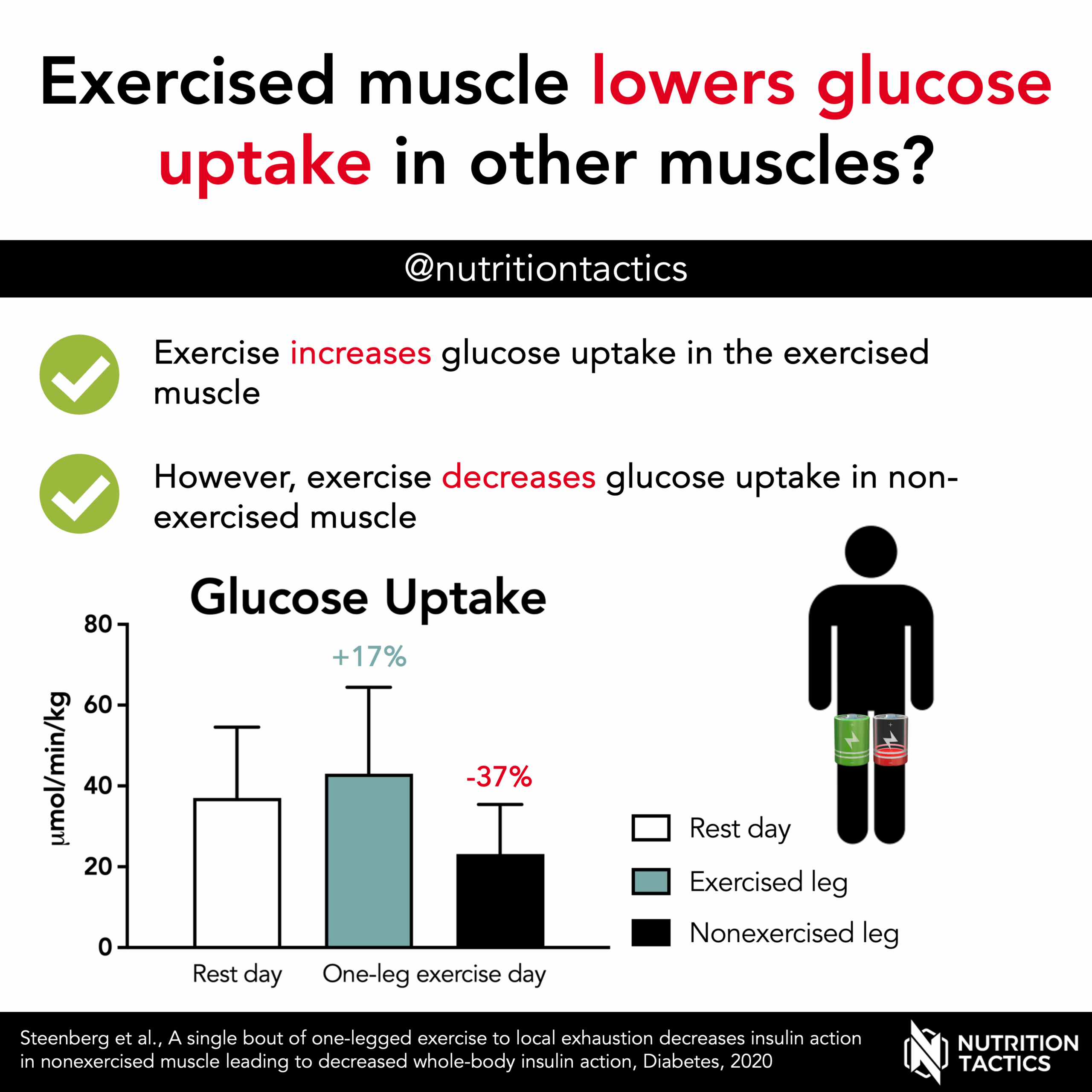
This study tested how one-legged exercise affects glucose uptake in exercised and nonexercised muscle. The exercise session consisted of one-legged knee extensions until exhaustion (around 2.5 h).
Glucose uptake was assessed with an insulin clamp on two different days:
- Day 1 (Rest): non-exercise leg
- Day 2 (Exercise)
- Exercised leg
- Non-exercised leg
Key findings:
- Glucose uptake increased by 17% in the exercised muscle
- Glucose uptake decreased by 37% in the nonexercised muscle
- Whole-body glucose uptake decreased by 18% compared to the rest day
What does this mean?
Exercising a muscle boosts glucose uptake in that muscle, but lowers it in muscle you did not exercise. This may be beneficial to direct glucose towards the muscle that needs it for glycogen recovery.
Surprisingly, whole-body glucose uptake appeared to decrease following one-limbed exercise. This counterintuitive finding is important for people with diabetes who need to regulate their blood sugar.
It remains to be determined if exercising a muscle also steals other nutrients. For example, don’t train legs because you want all the amino acids to go to your arms.
Leave a Reply